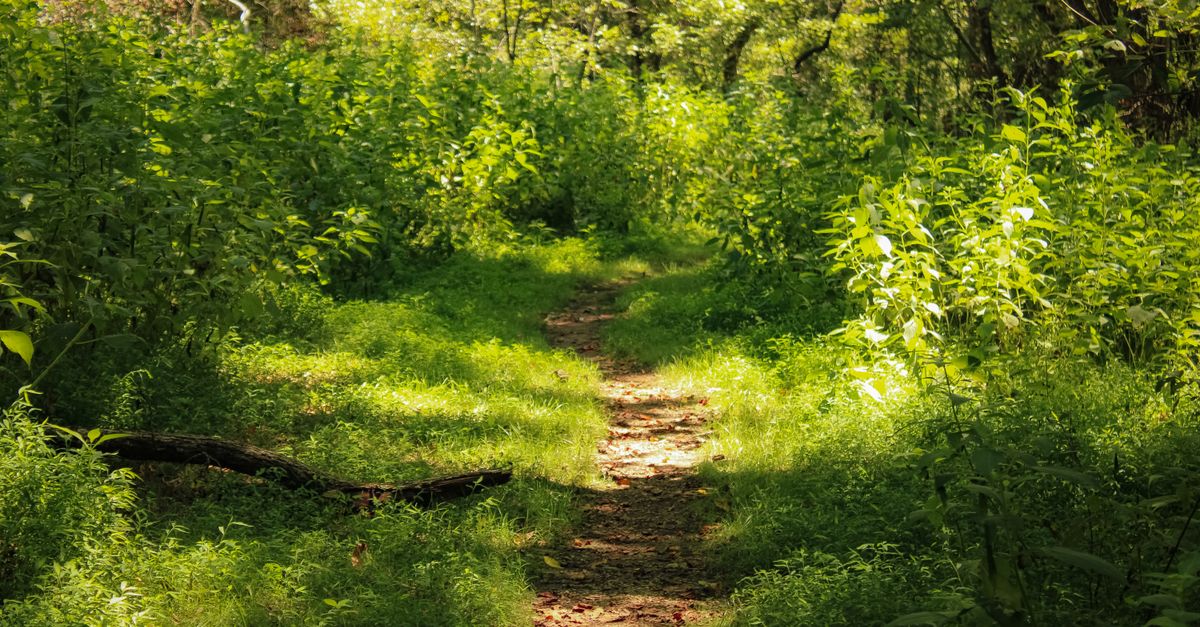
A Mile of Trail, 206 Acres of Breathing Room
On a weekday morning, before the Texas heat settles in for good, the path at the Sachse Nature Preserve tends to belong to the early risers — the retired teacher who walks the loop twice before breakfast, the young mother pushing a stroller through the shade of the creek bottomland, the jogger who discovered this stretch of land almost by accident and has not found a reason to run anywhere else since. The preserve sits at 5400 Pleasant Valley Road, and from the road it gives almost nothing away. A modest entry, a few parked cars, and then the land opens up into something that feels improbable for a city that has grown as fast as Sachse has.
Two hundred and six acres. One mile of maintained trail. Restored blackland prairie on one side, creek bottomland threading through the lower ground. For a community that has watched cornfields become subdivisions and empty lots become retail corridors over the past two decades, this particular piece of land represents something the city chose, deliberately, to leave alone — and in doing so, gave its residents something quietly irreplaceable.
What the Preserve Actually Is
Blackland prairie is not the kind of landscape that photographs dramatically. It does not have the red-rock grandeur of West Texas or the piney canopy of East Texas. What it has is specificity — a particular palette of native grasses and wildflowers that evolved over thousands of years on the heavy clay soils of North Texas, supporting an ecosystem of insects, birds, and small mammals that depends on that exact combination of plants and soil and seasonal flooding. Most of the blackland prairie that once stretched across this part of the state is gone, converted to agriculture and then to development. The patches that remain have become genuinely significant, even when they are measured in hundreds of acres rather than thousands.
The Sachse Nature Preserve protects one of those patches. The restoration work that has gone into the site — reestablishing native plant communities, managing invasive species, maintaining the creek bottomland in a condition that supports the broader ecological system — reflects a sustained commitment that extends well beyond simply mowing a field and calling it a park.
The trail system winds through both the upland prairie sections and the lower creek corridor, which means a single mile of walking can move a visitor through noticeably different environments. In the bottomland, the tree canopy closes overhead and the temperature drops several degrees. In the open prairie sections, the view extends far enough to remember what this part of Collin and Dallas counties looked like before the roads came through.
Designed for Everyone on the Path
The trail is well-maintained and suited to a wide range of users — walkers, joggers, and families who arrive with children of various ages and energy levels. It is not a technical trail in any hiking sense; there are no significant elevation changes, no scrambling over boulders, no navigation challenges. What it offers instead is a consistent, accessible loop that rewards repeated visits because the landscape itself changes through the seasons in ways that are easy to overlook on a single pass.
In late summer, the prairie grasses are at their tallest, and the late-afternoon light turns them a particular shade of amber that residents who have lived here long enough tend to recognize as distinctly local. By October, the bottomland trees begin to shift, and migratory birds move through the creek corridor on their way south. In spring, the wildflower component of the restored prairie comes into its own. Each visit is, in a modest but real sense, a different one.
Why It Matters Now
Sachse does not have an unlimited supply of undeveloped land. The city’s growth over the past fifteen years has been rapid and largely irreversible — land that is platted and built becomes something other than open space, and open space, once gone, does not return easily or cheaply. The existence of a 206-acre preserve within city limits is not something that can be replicated by simply deciding to do it somewhere else. The land is here, the restoration work has already been done, and the ecological community that has reestablished itself on the site represents years of investment that compounds quietly and continuously.
That context matters when thinking about what the preserve offers Sachse residents in practical, day-to-day terms. Parks with ball fields and pavilions and playground equipment serve essential functions in a community’s recreational life — Heritage Park on Hudson Drive, with its 36 acres and covered playground and barbecue grills, is a good example of that kind of amenity, and it draws consistent use. But the nature preserve operates in a different register. It is where a resident goes when the need is not for organized activity but for the particular quality of quiet that comes from being surrounded by something older and less managed than the surrounding city.
There is a body of research, well established by now, connecting access to natural areas with measurable improvements in mental health outcomes — reduced stress, better attention, lower rates of anxiety. Sachse families have that access. It is free, it is open year-round, and it is located within the city rather than requiring a drive to a regional destination.
The Parks and Recreation Department Connection
The Sachse Parks and Recreation Department oversees the nature preserve as part of the city’s broader parks portfolio, which means that the condition of the trail system, the ongoing restoration work, and the general accessibility of the site are maintained through the same municipal infrastructure that manages the rest of the city’s recreational amenities. The Parks and Recreation Board meets monthly — the September meeting is scheduled for September 10 at 6:30 p.m. — and residents who care about the future programming and capital investment connected to parks like the nature preserve have a direct, accessible channel for making that interest known.
It is worth noting that the preserve’s value is not self-sustaining in a passive sense. Blackland prairie restoration is active work. Managing invasive species, maintaining native plant communities, keeping the trail accessible — these require ongoing attention and funding. The preserve that exists today is the result of decisions made and resources committed over a period of years. The preserve that exists in ten years will reflect decisions being made now.
Getting There
The Sachse Nature Preserve is located at 5400 Pleasant Valley Road in Sachse. It is open year-round. There is no entry fee. The trail system covers one mile through the restored blackland prairie and creek bottomland, and the paths are maintained to accommodate walkers and joggers of all fitness levels. Early morning visits, before the full weight of a North Texas summer day arrives, tend to offer the best combination of temperature and wildlife activity — though the preserve holds something worth seeing in every season and at most hours of the day.
For residents who have driven past the Pleasant Valley Road entrance without stopping, or who have lived in Sachse for years without making the short trip out to see what is there, the window between now and the first genuinely cool days of fall is a reasonable moment to change that. The prairie grasses are tall and the bottomland creek is running, and for a mile’s worth of walking, the city feels very far away.


